The Sabotage Bill: A.K.A. The SAVE Act-Exposed
Breaking down the SAVE Act beyond the surface, exposing how a bill framed as election security could restrict access for millions of eligible voters. By examining its real-world impact, it challenges readers to question whether the goal is protection—or limitation—and who truly benefits when voting becomes harder.
CarlG
3/27/20262 min read
The Sabotage Bill: A.K.A. The SAVE Act-Exposed
What They Say It Is
On the surface, the SAVE Act—Safeguard American Voter Eligibility Act—sounds noble. Supporters say it protects elections from non-citizen voting.
Sounds good… until you take a closer look.
Those protections already exist. When you register to vote, you must confirm your citizenship under penalty of law. And despite the rhetoric, there is no credible evidence that non-citizen voting occurs at any scale capable of influencing elections.
So when a “solution” is introduced for a problem that isn’t truly there, the real question becomes: What’s really going on?
What It Actually Does—The Sabotage
Locks Out Millions of Eligible Voters
Approximately 146 million Americans do not have a passport. That’s nearly as many people as voted in the last presidential election. If voting begins to depend on documentation millions don’t possess, that is not security—it is exclusion.
Your Driver’s License Might Not Be Enough
Many Americans have already complied with ID requirements, obtaining REAL IDs, driver’s licenses, or even military identification. Under this bill, those may still fall short. A system that once said “you’re good” now shifts the standard to “not enough.”
Married Women Face Additional Barriers
Many married women have changed their last names, meaning their birth certificates no longer match their current identification. Requiring perfectly aligned documentation creates a significant and often overlooked barrier.
The Same Communities Are Hit the Hardest
States like Mississippi, Alabama, and West Virginia—where passport ownership is lower—would feel the greatest impact. These areas include many Black communities, rural populations, and individuals already facing limited access to resources. When the same groups are consistently affected, it raises serious concerns.
We’ve Seen This Before
Kansas implemented a similar policy with troubling results: over 30,000 people were blocked from registering, approximately 12% of applicants were affected, and more than 99% of those impacted were U.S. citizens. It did not stop fraud—it prevented legitimate voters from participating.
It Slows Down the Entire System
The bill would disrupt online voter re-registration, eliminate mail-in registration, and restrict voter registration drives. These changes do not improve access—they create additional obstacles for everyday citizens.
Everyday Changes Become Burdens
Simple updates—such as moving, changing party affiliation, or correcting information—would require in-person verification with documentation. This means time off work, transportation challenges, and long wait times just to remain registered.
Election Workers Are Put Under Pressure
Election workers could face fines or even criminal penalties for errors in registration. This creates an environment of fear, where caution may lead to unnecessary denials.
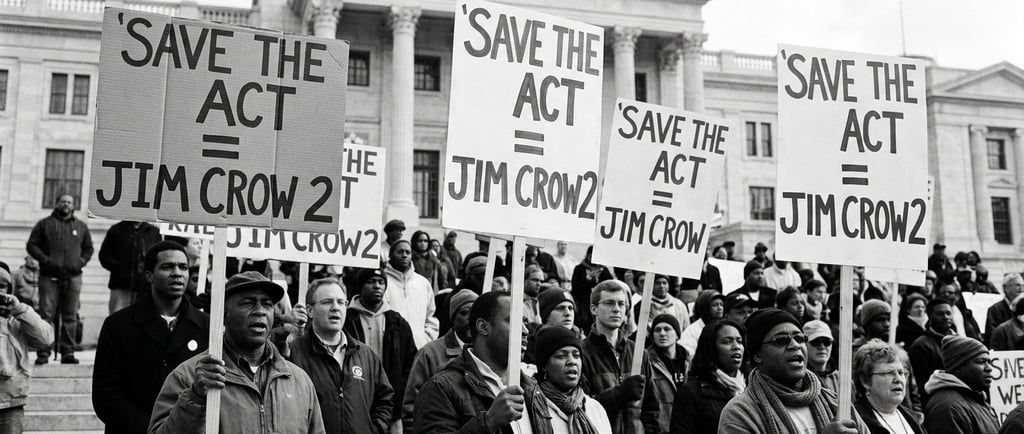
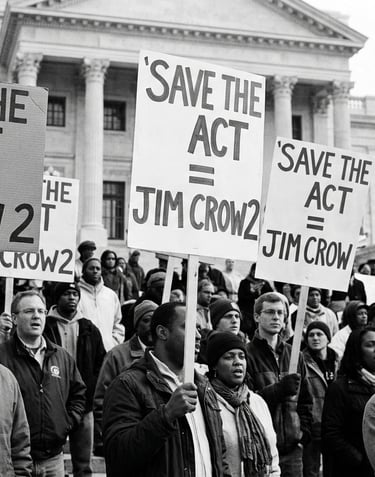
Why Some Call It “Jim Crow 2.0”
Historically, barriers to voting were rarely presented openly. Instead, they appeared as neutral requirements—paperwork, tests, and fees—that disproportionately impacted certain populations.
This bill follows a similar pattern:
Requirements many people do not have
Rules that disproportionately burden those with fewer resources
Pressure on officials to deny rather than assist
No clear plan for fair and equitable implementation
It may appear modern, but the approach feels familiar.
The Bottom Line
It is described as protection. In practice, it may function as restriction.
Rather than addressing a proven issue, it introduces new barriers for citizens who already have the legal right to vote.
Final Thought
When a law makes it harder for eligible citizens to participate than it does to prevent actual wrongdoing, it deserves careful scrutiny.
At that point, the issue is no longer just security—it is access.
And the real question becomes:
Who benefits when fewer voices are heard?